Bekins Van Lines Review: Nationwide Full-Service Moves









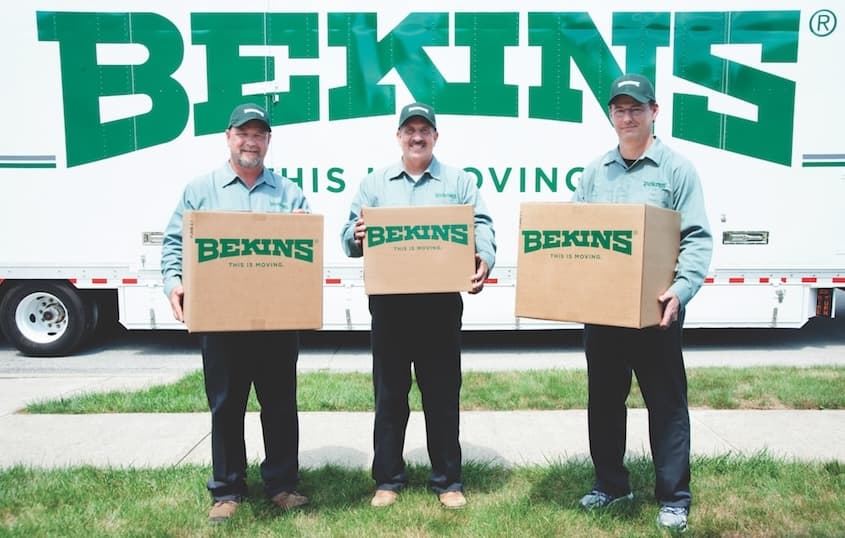
Founded in 1891, Bekins Van Lines traces their roots back to Sioux City, Iowa, making them one of the longest-operating names in the United States moving industry. That long history shapes how they approach relocations today, with an emphasis on structured processes, trained crews, professional movers, and nationwide reach designed to support customers moving into a new home.
This provider focuses on long distance, interstate, and international moves, supported by a network of agents across the country. That setup can appeal to households planning an upcoming move that requires coordination beyond a single moving truck and crew. Services extend beyond basic transport, with options like professional packing, storage solutions, specialty item handling, and corporate relocations, all designed to support different types of moves and offer added peace of mind.
Many people are drawn to companies with a long track record, especially when relocating a full household or managing a cross-country timeline measured in hundreds or thousands of miles. Experience alone does not guarantee the right fit, though. Service consistency, transparent pricing, and customer experience matter just as much as longevity.
This review breaks down how their services are structured today and what customers can realistically expect throughout the moving process, helping clarify whether their approach aligns with your needs, timeline, and expectations.
Pros
Cons
Content
Content
Quick Stats
Company Overview
This provider operates as a full-service moving and storage company with a national footprint. They support local, long-distance, interstate, and international relocations, serving households, businesses, and corporate clients. Their approach centers on coordinated moves handled through an agent network, which allows them to manage packing, transportation, storage, and logistics across the U.S. and abroad. Rather than focusing on short, one-day jobs, they tend to attract customers planning complex or large-scale relocations that require enough time, detailed scheduling, inventory planning, and longer transit timelines based on the type of move.
A key part of how they operate is the use of agent-based crews instead of a single centralized fleet. This model expands geographic coverage and allows flexibility in capacity, especially for cross-country or overseas moves. Services include full and partial packing, crating for fragile or high-value items, short- and long-term storage, and support for specialty shipments like pianos or antiques. Corporate relocation programs and government-related moves are also part of their service mix, which positions them toward clients who value structure and established processes.
Ownership changes have shaped how the company operates today. They are part of Wheaton World Wide Moving, a larger moving and logistics group that also owns other national van line brands. This acquisition consolidated resources, agent networks, and operational standards, while keeping brand operations distinct. For customers, this can mean access to broader infrastructure, shared systems, and standardized compliance practices.
Within the industry, they are widely recognized for their longevity and national footprint. They are accredited by the Better Business Bureau and hold an A+ rating, with their BBB profile offering additional insight into customer feedback patterns and complaint trends. Memberships and affiliations with established industry organizations, along with regular inclusion on moving company comparison lists, reinforce their visibility in the market. Public perception often links them with experience and operational scale, while customer reviews tend to focus on how consistently that experience carries through from initial planning to final delivery.
Company Features & Solutions
Residential moving services
- Local and long-distance moves: They handle local, interstate, and cross-country relocations through a nationwide agent network. This setup supports moves that require coordination across state lines and longer delivery windows
- International moving services: International relocations are managed through overseas partners and freight coordination. Services typically include export packing, customs documentation support, and destination delivery
- Full-service packing and unpacking: Packing options range from full-home packing to partial packing for fragile rooms or high-risk items. Unpacking services can also be arranged at the destination
- Custom crating for fragile items: Items such as artwork, mirrors, antiques, and electronics can be protected using custom-built wooden crates designed for long-distance transport
- Specialty item handling: They transport large or delicate items like pianos, pool tables, and oversized furniture using trained crews and specialized equipment
- Short- and long-term storage: Storage is available for customers facing delayed move-in dates or transitional housing gaps. Storage facilities are typically climate controlled and monitored
Corporate and government solutions
- Corporate relocation programs: Corporate moves are structured around employer policies and employee relocation needs. This often includes centralized billing, coordinated scheduling, and relocation planning support
- Government and military moves: They participate in federal and military relocation programs, including PCS moves. These services follow required documentation, valuation, and reimbursement standards
Planning and logistics tools
- In-home and virtual surveys: Move estimates are based on detailed inventories gathered through in-home or virtual surveys, helping align pricing with actual shipment size and services required
- Dedicated move coordination: Customers are assigned move coordinators who manage scheduling, paperwork, and communication between origin and destination agents
- Shipment tracking access: Tracking tools allow customers to monitor shipment status during transit, especially for long-distance and interstate moves
Protection and valuation options
- Basic valuation coverage: Released value protection is included by default, meeting federal requirements for interstate moves
- Full value protection plans: Customers can purchase upgraded valuation coverage that offers repair, replacement, or reimbursement if items are lost or damaged
Additional services
- Auto transport coordination: Vehicle shipping can be arranged as part of a household move, using licensed auto transport partners
- Debris removal and packing material disposal: After unpacking, crews can remove cartons and packing debris to help customers settle in faster
Costs, Fees, & Pricing Models
Booking a move with this provider usually begins with a virtual or in-home survey. During this step, a representative reviews your inventory, distance, timing, access conditions, and any extra services you may need. Pricing is not pre-packaged. Instead, costs are built around the actual scope of the move, which is standard for full-service van lines handling larger relocations.
How pricing is calculated
Several factors influence the final cost:
- Shipment size and weight: Long-distance pricing is based on the total weight or volume of household goods after loading
- Distance and route: Interstate and cross-country moves cost more due to fuel, labor time, and logistics
- Move timing: Peak season, end-of-month dates, and summer months often come at a higher rate
- Services selected: Packing, storage, specialty handling, and valuation coverage increase the base price
Customers are typically offered binding or non-binding estimates. A binding estimate locks in the price as long as the inventory and services remain unchanged. A non-binding estimate can change if the shipment weight or services differ from what was originally listed.
Optional services and upsells
Common add-ons that affect pricing include:
- Full or partial packing services
- Custom crating for fragile or high-value items
- Short- or long-term storage
- Shuttle trucks for limited access locations
- Long carries, stair carries, or elevator carries
- Specialty item handling, such as pianos or antiques
- Upgraded valuation protection
These services are itemized rather than bundled, which means the base quote may rise quickly if additional needs are added later.
Payment terms and accepted methods
Payment policies can vary by local agent, but interstate moves usually require payment at delivery. Based on publicly available information and industry practices, credit cards and certified funds are commonly accepted. Cash acceptance depends on the servicing agent. Financing or installment plans are not prominently advertised on official materials.
Fees, fine print, and potential surprises
Through our research, we found that unexpected charges most often stem from:
- Inventory changes made after the estimate
- Access challenges were not disclosed during the survey
- Packing is added on moving day
- Storage needs due to delayed delivery or housing issues
These charges are generally outlined in contracts, but they can be easy to miss. Reviewing the estimate carefully, confirming access details, and understanding valuation terms helps reduce billing surprises. Overall, pricing follows a traditional van line structure. Cost accuracy depends heavily on how detailed the initial survey is and how clearly optional services are discussed before booking.
Advantages
- Nationwide agent network with broad coverage: This provider operates through a large network of local agents across the U.S. That reach makes it easier to coordinate long-distance and interstate moves without switching companies mid-process. For customers planning complex relocations, broader coverage can reduce handoffs and scheduling gaps
- Long track record in full-service relocations: Decades of operating as a national van line have shaped standardized procedures for packing, transport, and storage. That experience tends to matter most for larger household moves where planning errors can lead to delays or damage
- Comprehensive packing and handling options: Full packing, partial packing, and custom crating are available for fragile or high-value items. Having these services under one provider can help reduce the need to source third-party packers or specialty handlers
- Support for corporate and institutional moves: Corporate relocation programs and government-authorized moves are part of their service mix. This structure can benefit customers whose moves require formal documentation, coordinated billing, or policy-based approvals
- Access to storage through local facilities: Short- and long-term storage options are available through affiliated warehouses. This flexibility can help during delayed closings, renovations, or staggered move-in timelines
- Structured estimating process: Pricing is built around visual surveys and detailed inventories rather than flat-rate assumptions. A more detailed estimate can reduce pricing gaps for customers who take the time to confirm their inventory upfront
Disadvantages
- Service quality can vary by local agent: Moves are carried out by independently operated agents rather than a single centralized crew. This structure means the experience may differ depending on location, staffing, and local management practices
- Limited consumer-facing tracking tools: Shipment updates rely on inventory systems and communication with coordinators rather than real-time GPS tracking. Customers who expect constant digital visibility may find this approach less transparent
- Pricing can rise if inventory changes: Estimates depend heavily on the accuracy of the initial survey. Items added later or access issues disclosed late can increase costs, which may frustrate customers working within a tight budget
- Financing options are not clearly promoted: Payment is generally expected upon delivery, with limited public information about installment plans. This setup may be challenging for customers who prefer more flexible payment timelines
- Less suited for small or budget-focused moves: Full-service van line pricing and processes may feel excessive for short local moves or minimal shipments. Customers seeking low-cost or self-service options may find better value elsewhere
Customer ِEِِِxperience
Customer ratings for this provider lean mixed to negative, with limited review volume but consistent concerns across platforms. On Trustpilot, they hold a 2.9 out of 5 rating based on only two reviews. On Yelp, reviews are split across multiple local agent profiles, with ratings generally ranging between 2.0 and 2.3 out of 5, based on roughly ten reviews. On the Better Business Bureau, they maintain an A+ accreditation, yet customer reviews average 1.71 out of 5 based on 17 submissions.
Positive feedback
Some customers describe smooth packing and transport experiences, particularly when working with experienced local crews. Positive reviews often mention careful handling of furniture, professional packers, and drivers who communicated clearly during pickup and delivery. In a smaller number of cases, customers report that estimates were accurate and that long-distance moves were completed with minimal damage or delay. These reviews tend to emphasize the quality of individual drivers or packing teams rather than the overall organization.
Critical feedback
Negative reviews are more frequent and detailed. Common complaints include lost or damaged items, delayed deliveries, and billing amounts that exceeded initial estimates. Several customers describe frustration with claims handling, stating that reimbursement requests were denied or significantly reduced despite purchasing valuation coverage. Others report poor communication after pickup, including missed delivery windows, difficulty reaching coordinators, and a lack of accountability when subcontractors were involved. Storage-related moves appear especially prone to disputes, with multiple reviewers alleging theft, mishandling, or liability gaps once items are entered into storage facilities.
Based on activity and customer reports, responses to complaints are infrequent. While some cases show formal acknowledgments, many reviews note a lack of follow-up or resolution. Customers often describe the claims process as rigid and adversarial, with responsibility shifted between drivers, agents, and claims administrators rather than clearly addressed.
Customer experiences vary significantly depending on the local agent, driver, and move complexity. Because review volume is limited and heavily location-dependent, readers are encouraged to conduct their own research, speak directly with past customers when possible, and ask detailed questions about claims handling, subcontracting, and delivery timelines before booking.
Customer Support
Support overview and contact options
Customer support is mainly provided through phone and email, with inquiries handled by a central customer care team or the assigned local agent. Customers can also submit questions through an online contact form on the official website. Response times vary, but replies are usually expected within a few business days. Live chat and clearly stated 24/7 support are not prominently offered.
Available support channels include:
- Phone support: A toll-free number, (800) 456-8092, connects customers to general assistance, with routing available for move planning, logistics, and other departments
- Email support: The primary customer care email, bekinscustomercare@wvlcorp.com, is used for questions about moving plans, service issues, and general inquiries
- Claims support: Loss or damage claims can be started by calling 833-425-4982 and selecting the appropriate option, or by emailing claims@wvlcorp.com
Accessibility and responsiveness
Support accessibility depends on the type of inquiry. Phone lines for general questions and move planning are typically staffed during regular business hours, though hold times can vary during peak moving seasons. Email responses generally arrive within one to three business days, though volume and complexity may affect timing. On social media channels, responses are sometimes provided, but timings also vary. Independent responsiveness tools score their customer service around average for the industry, reflecting moderate reply times rather than immediate live support.
There is no dedicated live chat feature or clear indication of around-the-clock support on the main site, so customers should plan to contact support during standard business hours or allow extra time for email replies.
FAQs and online resources
The company also provides a set of online resources to help customers prepare for and manage their move. These tools are meant to answer common questions and set expectations before booking. Key resources include:
- Moving guides and planning resources: Step-by-step information covering interstate moves, packing preparation, scheduling, and what to expect before pickup and delivery
- Claims resource page: Clear guidance on how to file a claim, what documentation is required, and the deadlines for reporting loss or damage
- Survey request tools: Options to request virtual or in-home surveys, which are commonly used to build accurate inventories and pricing estimates
- Alternative survey options: A dedicated section explaining virtual estimate methods for customers who need added flexibility during planning
Conclusion
This provider appeals most to customers planning large, long-distance, or logistically complex moves. Their nationwide agent network, full-service model, and ability to handle packing, storage, specialty items, and international shipments create flexibility for households and organizations that need more than basic transport. These capabilities can be useful for cross-country relocations, corporate moves, or situations where timing and coordination play a major role.
When execution is strong, customers benefit from structured planning, detailed surveys, and experienced crews who manage packing and transport with care. Access to storage and valuation options adds another layer of support, especially for moves involving delayed delivery or high-value belongings. For some users, these features translate into predictable timelines and fewer handoffs during the move itself.
Customer feedback, though, shows that outcomes can vary. Reviews point to differences in service quality between local agents, limited shipment visibility during transit, and frustration with claims resolution when problems occur. Cost increases tied to inventory changes and access issues also appear in complaints. These patterns suggest that preparation, documentation, and agent research play a major role in shaping the final experience.
Choosing a mover comes down to matching services with expectations. To see how this provider compares with other national and regional options, you can explore our detailed moving company reviews. For a clearer view of pricing structures, services, and trade-offs, our comparison tool lets you evaluate providers side by side. And for practical guidance on estimates, contracts, and move planning, visit our moving blog.
Save Big on Moving
Fill out a quick form to claim special offers on Moving