Oscars Restrict AI in Acting & Writing Awards


The Academy of Motion Picture Arts and Sciences has updated its rules at a moment when artificial intelligence is becoming harder to ignore in filmmaking. The change does not block AI from the industry, but it does draw a line around who can be recognized when awards are handed out.
The update, introduced ahead of the 99th Academy Awards, reflects a shift in how the Academy is responding to rapid changes in creative technology and comes as AI tools are increasingly used across writing, editing, and even performance simulation. The timing points to a broader concern inside the industry about how far these tools could go in reshaping creative roles.
The key clarification is that this is not a ban. Films that use AI remain eligible for Oscars, but the Academy is reinforcing that awards in categories like acting and writing are meant to recognize human individuals. That distinction carries more weight now than it did just a few years ago.
Under the updated rules, nominees in acting categories must be human performers, and writing awards are tied to credited human writers. The rules also make clear that credited companies or entities cannot be considered for writing awards, which keeps authorship tied to individuals rather than organizations or systems.
According to BBC News, the Academy clarified that the use of AI “neither helps nor harms” a film’s chances of being nominated. The statement reflects an effort to allow technological use while maintaining a clear standard for human creative contribution.
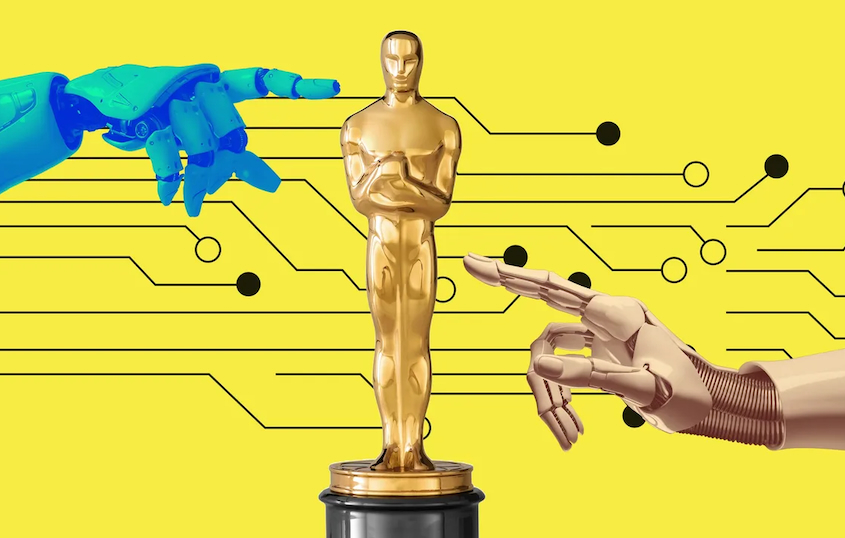
This approach comes after years of tension in Hollywood around AI. During the 2023 Hollywood strikes, writers and actors pushed back against the idea that studios could rely on AI to generate scripts or recreate performances without proper consent or compensation. Those concerns helped push the conversation from theory into policy.
The Academy’s decision reflects that pressure without imposing a full restriction. AI can still be used throughout production, including in visual effects, editing, and early development, and in some cases may support elements of writing or performance. However, it cannot replace human involvement when it comes to award recognition.
That distinction becomes more important as AI tools improve. Some systems can now generate realistic faces, voices, and dialogue. Others can produce full script drafts based on prompts. The output can look convincing. But the Academy is making a different point. Recognition is not about the final product alone. It is about who made the creative decisions behind it.
Acting involves more than delivering lines. It includes interpretation, emotional timing, and collaboration with directors and other performers. Writing involves more than structure. It reflects perspective, experience, and intent. AI can replicate patterns, but it does not originate those elements in the same way.
There are still gray areas. Many productions already use AI in limited ways, such as de-aging actors or enhancing voices. The Academy has left room to review cases individually, especially when technology supports a human performance rather than replaces it. That suggests the rules may continue to evolve as the technology becomes more embedded in everyday workflows.
There is also the question of how these rules will be applied in practice. As AI tools become more subtle, it may be harder to separate human work from machine-assisted work. That could lead to new disclosure expectations or closer review during the submission process.
Even with those uncertainties, the broader message is clear. The Academy is trying to protect what the Oscars represent. These awards are meant to recognize people, not systems.
This decision could also influence other organizations like the British Academy of Film and Television Arts and major international festivals. If similar standards are adopted elsewhere, it could shape how AI is treated across the global film industry.
At its core, this is about preserving authorship. AI will continue to be part of filmmaking. That is not changing. What the Academy has done is define where recognition begins and ends. It keeps the focus on the human side of storytelling, even as the tools used to tell those stories continue to change.
For more articles like this, visit our lifestyle news page!