Taylor Swift Fights Back Against AI Voice Clones


Taylor Swift has filed trademark applications for her voice and image as concerns around AI-generated deepfakes and digital impersonation continue to grow. The filings, submitted through TAS Rights Management, cover two sound marks and one image tied to her public identity, signaling a more proactive approach to protecting her likeness in an evolving legal space.
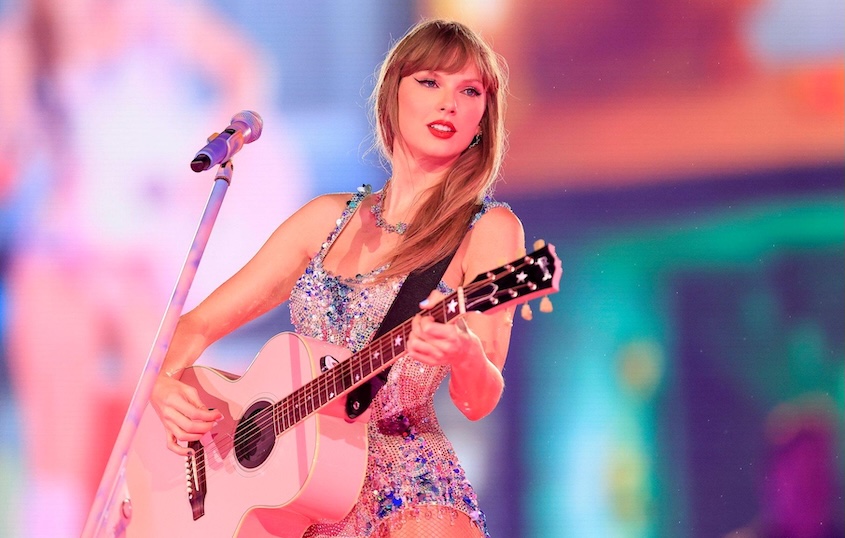
The sound trademarks focus on short, recognizable phrases. One application covers Swift saying, “Hey, it’s Taylor Swift,” while the other covers “Hey, it’s Taylor.” The image trademark focuses on a specific Eras Tour moment where she holds a pink guitar, wearing a multicolored bodysuit and silver boots. While these details may seem narrow, they could give her legal team clearer grounds to challenge AI-generated content that mimics her voice or appearance closely enough to mislead audiences. As reported by The Guardian, the filings are aimed at protecting her identity from unauthorized AI use, including deepfakes that replicate her likeness without consent.
The timing reflects a pattern of incidents that have already placed Swift at the center of the deepfake conversation. In early 2024, explicit AI-generated images of her circulated widely across social media platforms, drawing public backlash and renewed calls for stronger safeguards. Later, manipulated images falsely suggested she supported a political candidate, adding to concerns about how synthetic media can be used to spread misinformation. These cases highlight a key issue. Even when content is fake, it can still shape public perception before it is corrected.
Traditional legal protections have not fully kept pace with these developments. Copyright law protects recorded music and original works, while right of publicity laws cover the commercial use of a person’s name, image, and likeness. AI complicates both. A generated voice that sounds like Swift may not directly copy an existing recording, and a synthetic image may not reuse a specific photo. Trademark law introduces a different angle by focusing on whether content creates confusion about authenticity or endorsement. If a deepfake leads audiences to believe Swift was involved, that could open the door to legal action under trademark claims.
Legal experts describe this as an emerging strategy rather than a settled one. Trademarking a short phrase or a specific visual does not give someone complete control over every version of their voice or likeness. It can, however, create a clearer reference point in disputes. As AI tools improve, those reference points may become more important when trying to show that content crosses the line from imitation into deception.
The broader impact of this move extends beyond one artist. Swift has the resources to file trademarks and challenge misuse through legal channels. Many creators do not. Independent musicians, smaller performers, and online content creators often lack the funding to pursue lengthy legal action, even when their work or identity is misused. That gap creates a system where some voices can be defended while others remain exposed.
This is where the move takes on added significance. When a high-profile artist pushes for stronger protections, it can influence how laws are interpreted and how platforms respond to misuse. It may also help push the conversation toward clearer standards around consent. AI tools themselves are not the issue. Many artists are exploring ways to use them in controlled and transparent settings. The concern is how easily they can be used without permission, especially when it involves something as personal as a voice or identity.
For audiences, the issue comes down to trust. As synthetic media becomes more convincing, it becomes harder to tell what is real. A realistic voice clip or image can spread quickly and shape public perception before it is challenged. That makes legal clarity more important, not just for artists, but for anyone consuming digital content.
Swift’s trademark applications will still need to go through review by the U.S. Patent and Trademark Office, and their full impact will likely depend on how they are tested in real-world cases. Even so, the filings reflect a growing shift in how identity is treated in the digital age. Control over a person’s voice and image is becoming a central issue, and artists are beginning to respond before technology moves further ahead of regulation.
For more articles like this, visit our lifestyle news page!