Content
Recent Posts
Does Creatine's Science Live Up to Its Growing Hype?


Creatine spent decades associated with bodybuilders, athletes, and gym culture. Now, it is being discussed for healthy aging, muscle preservation, menopause, and brain health, while its audience increasingly includes women, middle-aged adults, and teenagers. A new study is adding to that attention, finding that adults ages 45 to 65 who took creatine gained lean tissue mass and improved strength and muscular endurance, including participants who did not follow the study's exercise and diet program.
The findings sound impressive, but they need context. Only 64 people completed the 12-week trial, participants took 10 grams of creatine monohydrate per day, and the researchers said some cognitive and health-marker findings should be considered exploratory. The study gives researchers another reason to investigate creatine beyond sports performance, but it also highlights a growing problem. As creatine moves into mainstream wellness, promising findings can quickly turn into much broader claims about what a daily scoop can supposedly do.
Content
What the Research Actually Supports
Unlike many supplements that become popular before researchers have much evidence to work with, creatine already has decades of research behind it. The National Institutes of Health's Office of Dietary Supplements calls creatine one of the most thoroughly studied supplements for exercise and sports performance. Research supports its ability to improve strength, power, and performance during repeated high-intensity efforts, and creatine monohydrate remains the most widely studied form. Recent research also helps explain why interest is spreading beyond athletes. A 2026 analysis of seven randomized trials involving 608 postmenopausal women found small gains in lean mass and strength, with benefits clearest when at least 5 grams per day was combined with resistance training. However, it found no overall improvement in bone density.
Brain health is where the evidence becomes less clear. A 2024 meta-analysis of 16 randomized trials involving 492 people found benefits for memory and some measures of attention and processing speed, but no significant improvement in overall cognitive function or executive function. The evidence for memory was rated moderately certain, while evidence for several other cognitive outcomes was considered low certainty. That makes cognition a legitimate area of research, but not one where every claim circulating about creatine can be treated as settled science.
How a Gym Staple Found a Much Bigger Audience
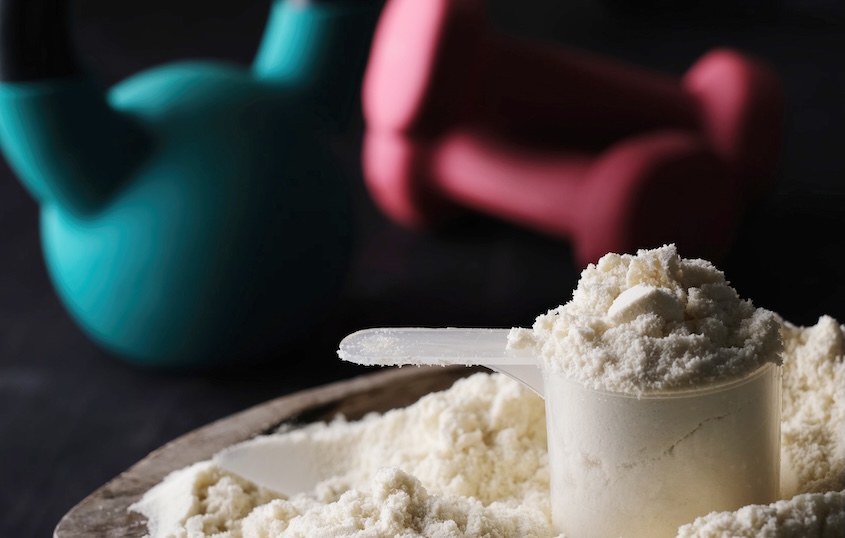
The bigger shift, then, is not that creatine suddenly started working, but that its potential uses have expanded far beyond the gym. Research into aging, menopause, and cognition has helped drive that change, while wellness coverage and social media can make early findings sound far more conclusive than they are. “May improve certain cognitive measures” becomes “boosts brain health,” while a small trial showing gains in lean tissue without structured exercise becomes “builds muscle without working out.” The research behind these claims may be legitimate, but much of the scientific nuance can disappear by the time it reaches consumers.
Teenagers offer another example of how quickly that cultural shift is happening. University of Michigan researchers reported in 2026 that adolescent creatine use had risen sharply, with increases of 168% among girls and 90% among boys, though boys still made up the largest share of users. Researchers pointed to the growth of fitness influencers and online gym culture as possible factors. That does not establish that creatine is unsafe for teenagers, but teen-specific safety research remains much thinner than the adult evidence. The supplement's popularity, in other words, may be reaching new groups faster than researchers can answer questions specific to those groups.
Where the Evidence Starts to Thin Out
There is some irony in creatine's new reputation. It spent years being viewed by some consumers as a questionable bodybuilding shortcut despite substantial evidence supporting its use in healthy adults. Safety research has also continued to be reassuring. A 2026 analysis covering 684 randomized trials and more than 12,800 participants across creatine and placebo groups found reported side effects were infrequent, generally mild, and showed no consistent pattern of increasing with higher doses or longer supplementation.
Now, the risk is less about unfairly dismissing creatine and more about expecting too much from it. There is strong evidence behind its established exercise uses and encouraging research into muscle and strength as people age. Cognitive benefits and other newer applications remain less settled, and evidence from one population cannot automatically be applied to another. Creatine has good reason to leave its old gym-only reputation behind, but "well studied" does not mean "proven for everything." The supplement may deserve its mainstream moment, but the idea that nearly everyone needs it is a much bigger claim than the science currently supports.
For more articles like this, visit our Lifestyle News Page!