Content
Recent Posts
AI Can Do the Task but Not Always the Job


Some employers that cut workers while embracing artificial intelligence are already reconsidering those decisions.
A recent CNBC report highlighted a growing trend among companies that expected AI to take over work previously handled by employees. Instead of eliminating the need for human workers, some organizations have discovered that AI often performs best as a tool that supports employees rather than replaces them. The shift comes as businesses continue investing heavily in automation while trying to determine where AI can genuinely reduce labor needs and where human expertise remains essential.
The broader trend is undeniable. Artificial intelligence has become one of the most frequently cited reasons for workforce reductions in recent years. Data from Challenger, Gray & Christmas shows that employers increasingly point to AI adoption and automation initiatives when announcing layoffs. At the same time, labor market researchers and business analysts are finding that the reality of AI in the workplace is more complex than many early predictions suggested.
Content
Which Jobs Are Most Vulnerable to AI?
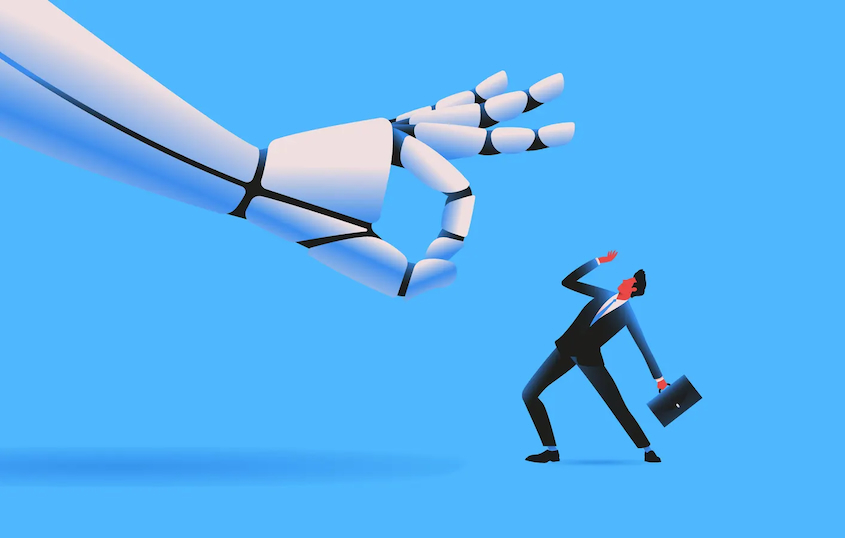
The jobs facing the greatest disruption tend to be those built around repetitive digital tasks. Customer service representatives, data entry specialists, administrative support staff, junior software developers, content creators, and certain human resources professionals have all seen parts of their work become easier to automate. Generative AI systems can answer common questions, summarize documents, draft emails, generate code, create reports, and process large amounts of information in seconds.
That does not necessarily mean these occupations are disappearing. In many cases, AI is replacing specific tasks rather than entire jobs. A customer support chatbot may handle routine inquiries, but unusual complaints, sensitive situations, and complex customer issues still require human judgment. AI coding assistants can speed up development work, but developers remain responsible for reviewing code, identifying vulnerabilities, solving unexpected problems, and ensuring software functions as intended. The same pattern is emerging across many professions where technology can complete part of the work but cannot fully own the outcome.
This distinction is becoming increasingly important as companies move beyond pilot projects and begin measuring real-world results. Automating a workflow is often easier than replacing the employee who manages it.
Why Some Employers Are Regretting AI Layoffs
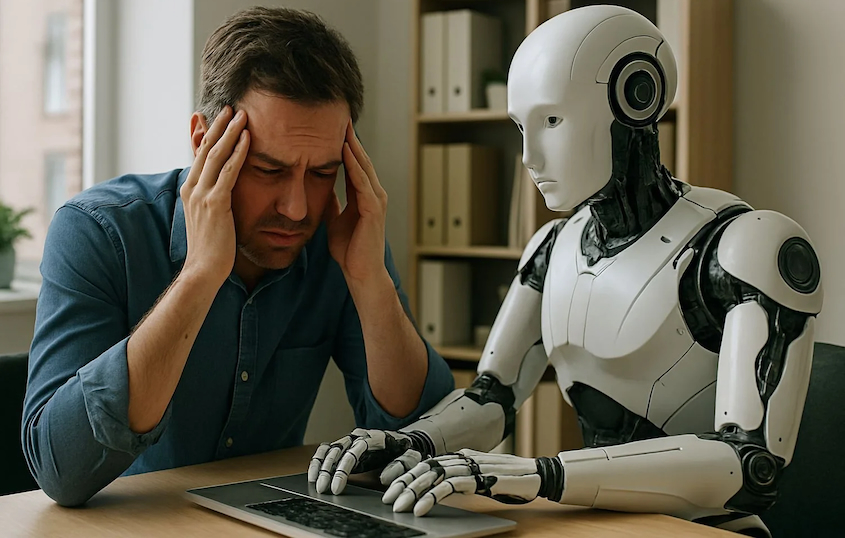
The growing reports of employer regret stem from a simple realization: jobs involve far more than the tasks listed in a job description.
While AI excels at processing information and generating content, it often struggles when situations require context, creativity, accountability, relationship management, or decision-making under uncertainty. Experienced employees routinely solve problems that were never documented in a training manual, navigate difficult customer interactions, identify risks before they become costly mistakes, and apply lessons learned from years of experience. These capabilities are difficult to replicate with current AI systems.
Some employers have found that reducing headcount too aggressively created new operational challenges. Teams became more dependent on remaining workers to review AI-generated output, correct mistakes, and handle exceptions. In some cases, organizations reportedly discovered that institutional knowledge left with the employees who were laid off. Rebuilding that expertise can be far more difficult than anticipated.
The lesson many businesses appear to be learning is not that AI lacks value. In fact, business adoption continues to grow across industries such as finance, insurance, technology, and professional services. The challenge is determining where automation genuinely improves productivity and where human expertise remains the deciding factor. Companies that expected AI to function as a direct replacement for experienced workers are finding that the technology's strengths and limitations often become apparent only after implementation.
Why AI is unlikely to replace every worker
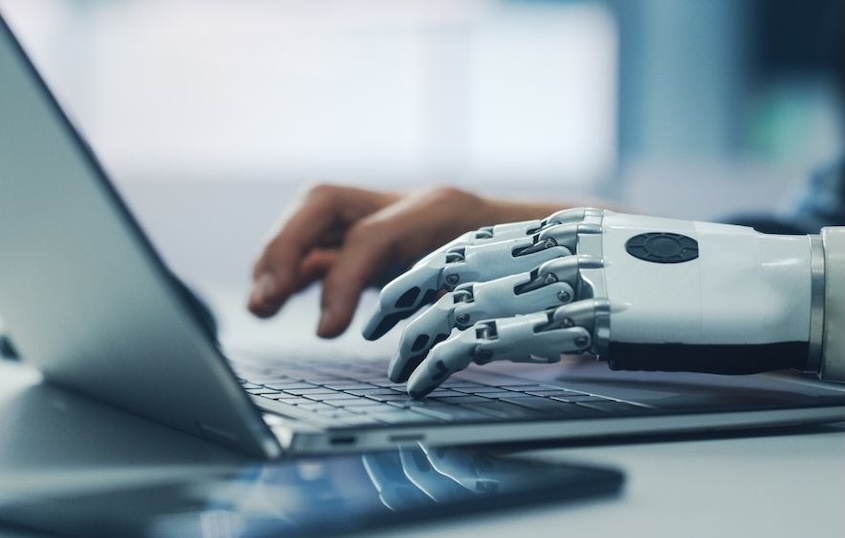
The idea that AI will eliminate most jobs remains popular in public debate, but much of the available research paints a different picture. A recent ILO study on occupational exposure to generative AI suggests that AI is more likely to transform jobs than eliminate them outright. Many occupations contain a mix of routine and non-routine responsibilities, allowing some tasks to be automated while leaving others firmly in human hands.
History offers a useful comparison. The introduction of personal computers, the internet, and industrial automation all changed how people worked. Certain jobs disappeared, new ones emerged, and many occupations evolved to incorporate new tools. AI appears to be following a similar path, though the pace of change may be faster than previous technological shifts.
Evidence of that transformation is already visible. Marketers use AI to draft content and analyze data. Software developers use it to accelerate coding tasks. Customer service teams rely on AI to surface information more quickly. Lawyers, accountants, researchers, and healthcare professionals are experimenting with AI-assisted workflows that reduce time spent on repetitive work. In each case, the technology often increases productivity without eliminating the need for skilled professionals.
The roles that appear most resistant to automation are those that depend heavily on human interaction, trust, judgment, leadership, and adaptability. Healthcare providers, skilled tradespeople, managers, negotiators, consultants, and many creative professionals continue to perform work that requires understanding people, interpreting complex situations, and making decisions with real-world consequences. These are areas where AI remains a supporting tool rather than a substitute.
That does not mean workers are immune to disruption. Many jobs will change as AI capabilities improve, and some roles will likely shrink or disappear over time. Yet the evidence so far suggests that the future of work is less about mass replacement and more about redistribution. Workers who understand how to use AI effectively may become more productive, while businesses that combine technology with human expertise may gain the greatest advantage.
The growing number of employers reassessing AI-driven layoffs highlights a reality that is becoming harder to ignore. Artificial intelligence can generate answers, automate workflows, and complete tasks at remarkable speed. What it cannot consistently provide is the experience, judgment, accountability, and adaptability that people bring to their work. For companies rushing to reduce headcount in the name of automation, that distinction is proving far more important than many expected.
For more articles like this, visit our Tech News page!