Content
Recent Posts
Project Hail Mary & What Connection Makes Possible


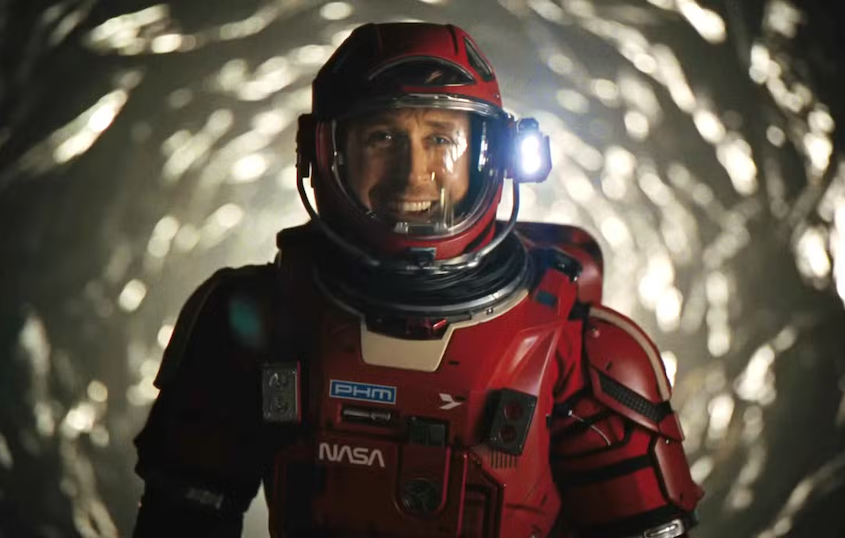
One of the most striking moments in Project Hail Mary comes early, before anything is fully understood. Ryland Grace stands in front of Rocky, an alien he does not understand, separated by more than just distance. He does not know what Rocky is capable of. He does not know if the environment is safe. He does not even have a shared language to rely on.
He takes off his helmet.
Not because it is safe, but because not doing it would mean choosing fear over connection.
The moment works because it is not driven by logic. It is driven by instinct and vulnerability. Grace chooses to act as if trust is possible before he has any real proof that it is. That decision does more than move the plot forward. It sets the emotional direction of the entire story.
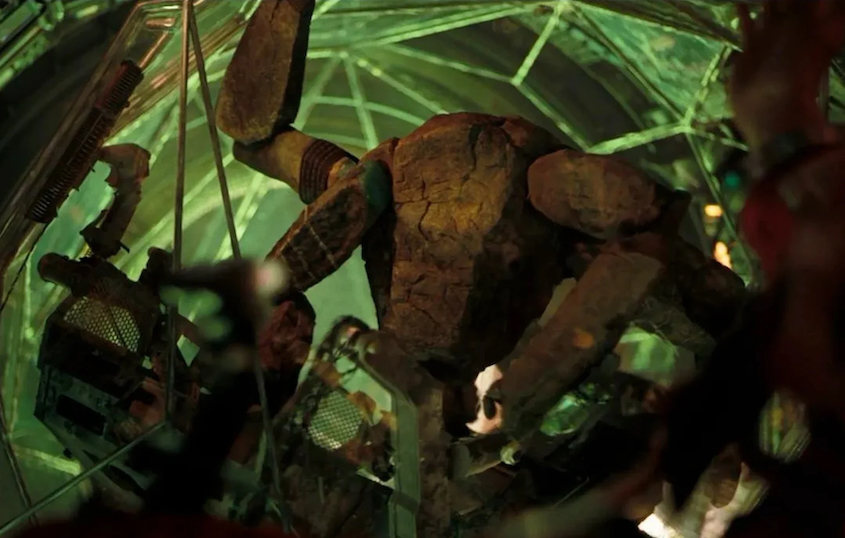
Part of why that relationship feels so convincing comes from how it was created. Rocky was not treated as something purely digital. During production, he was brought to life on set through puppetry so that actors could interact with him directly, which helped ground their dynamic in something tangible, as reported by People. That choice carries into the story itself. The connection between them does not feel distant or imagined. It feels built.
What follows is not just a mission to save Earth. It is a progression from understanding to connection, and from connection to sacrifice. This article includes spoilers for key moments and the film’s ending.
Content
Language Is Built, Not Given
From uncertainty to meaning
The relationship between Grace and Rocky begins in confusion. Their first attempts at communication are slow, awkward, and uncertain. They rely on patterns, repetition, and basic shared references like numbers. Nothing is immediate. Every step forward requires adjustment, and every misunderstanding carries risk. That process matters because it grounds the story in effort. Communication is not presented as something that simply happens when two intelligent beings meet. It is something they have to build together, piece by piece.
Even though the film moves faster than real-world linguistics would allow, the intention remains clear. The focus is not on perfect translation. It is on persistence. Grace and Rocky reach an understanding not because they get everything right, but because they refuse to stop trying. Over time, meaning begins to form, and with it comes the possibility of something more than survival.
When language starts to carry emotion
At a certain point, communication shifts. It is no longer just about exchanging information. The focus moves from getting things right to understanding each other well enough to trust. Their language is still imperfect, but it begins to carry something more than meaning. It begins to carry intent.
Rocky’s phrasing never fully becomes smooth or human-like, and that is what makes it work. Early on, his sentences are fragmented and literal, built from the structure they have managed to establish. He says things like “Rocky hate Mark” or “Who is Grace talking to, question,” where the meaning is clear, but the form is still in progress. Even simple emotional states come through in blunt, almost clinical terms: “Grumpy. Angry. Stupid. How long since last sleep?” The language is functional, but it already reveals awareness, concern, and personality.
As their understanding deepens, the same structure begins to carry weight. “Rocky watch crew die. Could not fix. Grace say Grace will die. Rocky fix” is still broken in form, but not in meaning. It communicates memory, loss, and a promise, all within a limited system of shared words. The emotional clarity does not come from perfect grammar. It comes from shared context.
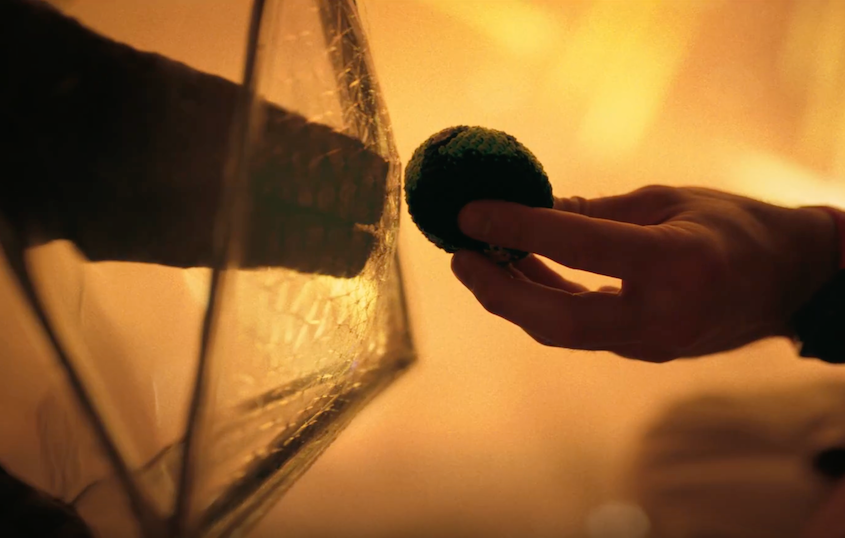
Even moments of excitement feel distinct. “Amaze! Amaze! Amaze!” is simple, repetitive, and unmistakable. It captures something immediate and genuine without needing refinement. In contrast, phrases like “Fist my bump” show how language is still being assembled, pulling from human expressions and reshaping them into something new. It is imperfect, but it is alive.
By the time Rocky says something like “Rocky Grace save stars,” the structure remains basic, but the meaning has expanded. It reflects not just cooperation, but shared purpose. What exists between them is already recognizable as friendship, even if it is not perfectly defined in words.
That shift matters because it shows that language, in this story, is not just a tool. It is a bridge. It allows two completely different beings to recognize something in each other that cannot be reduced to data or logic.
Connection Does Not Depend on Similarity
A friendship built through effort
What makes the connection between Grace and Rocky stand out is how little they share on the surface. Their biology, senses, environments, and experiences are entirely different. Under normal circumstances, they would remain strangers. Instead, they form a bond that feels grounded and believable because it grows out of shared experience. They solve problems together. They rely on each other. They find moments of humor in situations that should feel overwhelming.
This is not a connection based on familiarity. It is built through consistency. Each small interaction reinforces trust, and over time, that trust becomes something stable.
“Not enough” and the universality of love
One of the most memorable exchanges comes when Rocky describes being with his mate for more than a century and still says it is not enough. The scale of time is unfamiliar, but the feeling is not. That line works because it strips emotion down to something immediate. Wanting more time with someone you love does not depend on shared biology or shared understanding of time. It does not need translation.
The film does not try to make Rocky feel human in a superficial way. It allows him to remain entirely different while still expressing something deeply recognizable. That balance is what makes the moment land. It suggests that love, in its simplest form, is not limited to one kind of being. It exists wherever there is a connection strong enough to make time feel insufficient.
When connection becomes action
The relationship between Grace and Rocky does not stay in words. It shows itself in choices. Rocky helps Grace repair the ship and gives him what he needs to survive. There is no hesitation or negotiation in that decision. It reflects a level of trust that has already taken root.
At that point, connection is no longer abstract. It is something that carries weight. It shapes behavior. It creates expectations. Most importantly, it sets the stage for what comes next.
Sacrifice Becomes a Choice, Not a Duty
The moment a real option exists
The story reaches a turning point when Grace is no longer trapped. With Rocky’s help, he now has the resources to return to Earth. For the first time, leaving is not just a distant hope. It is a real possibility. That detail changes how the rest of the story is understood. Any decision that follows is no longer forced by circumstance. It becomes a choice.
That distinction matters because sacrifice only carries meaning when there is something to give up. Without an alternative, there is no tension. With one, every decision becomes heavier.
Turning back and what it represents
When Grace realizes that Rocky will not survive, the situation shifts again. He can leave. He can survive. He can still be considered a hero. Instead, he turns the ship around. The moment is quiet, but it defines everything that follows. No one asks him to do it. No one is there to witness it. There is no guarantee that anyone will ever know what he chose.
That is what gives the decision its weight. It is not framed as a heroic act in the traditional sense. It is a personal one. By that point, leaving would mean accepting the loss of someone he has come to care about, and that is no longer something he can justify.

Living with the decision
The sacrifice does not end with the act itself. It continues in what comes after. Grace does not return to Earth. He builds a life elsewhere. He teaches, adapts, and finds purpose in a place that was once completely foreign to him. The story does not rush past this outcome. It allows it to settle.
That makes the sacrifice feel lasting. It is not a single moment of courage. It is a change in the course of a life.
The Ending & the Question of Recognition
A story that may or may not be told
The film leaves open the possibility that Grace’s story reaches Earth. Eva Stratt receives the data from the mission, which suggests that some version of events can be understood. At the same time, the story does not show what happens next. It does not confirm how much is known, how it is interpreted, or whether Grace himself is remembered.
That uncertainty feels deliberate. It keeps the focus on the decision rather than its aftermath.
Why recognition no longer matters
By the time recognition becomes possible, it is no longer relevant to Grace’s choice. He acted without the expectation of reward, acknowledgment, or return. The meaning of what he did comes from the fact that it was done in isolation, with nothing to gain.
That is what gives the ending its emotional weight. It does not rely on validation. It rests entirely on the idea that understanding someone deeply enough can change what you are willing to do for them.
What the Story Leaves Behind

Project Hail Mary follows a clear progression that ties its themes together. Language creates the possibility of understanding. Understanding creates the conditions for connection. Connection leads to decisions that carry real cost.
The story builds its impact through small, deliberate shifts in how two characters relate to each other. By the time the final choice is made, it does not feel sudden. It feels like the natural result of everything that came before.
What stays with you is not the scale of the problem or the mechanics of how it is solved. It is the moment when understanding becomes something you cannot ignore.
Because once you understand someone, choosing to walk away is no longer neutral. It becomes a decision in itself.
And that is what gives the story its weight. Not the fact that Grace could sacrifice everything, but that by the time it mattered, he no longer saw it as a sacrifice at all.
For more articles like this, visit our lifestyle news page!