Meet Slop Evader, the New Anti-AI Browser Tool

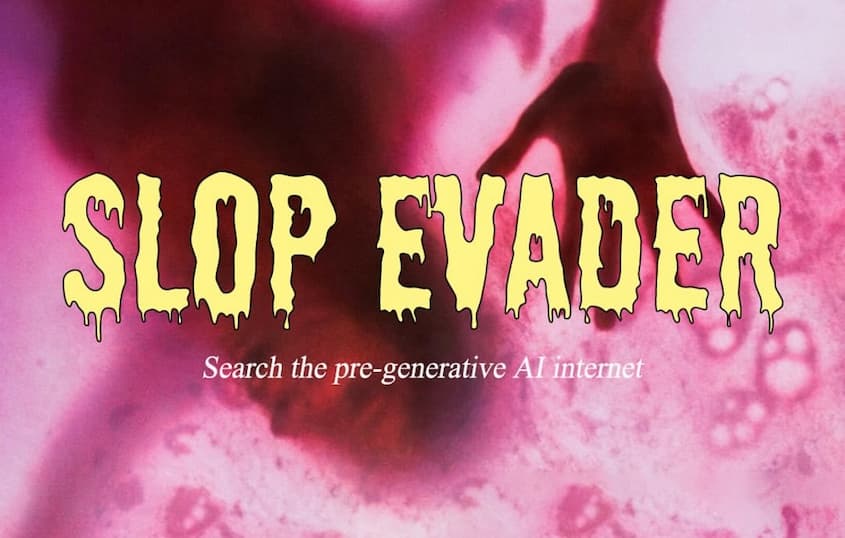
A new browser extension called Slop Evader is gaining attention for taking a surprisingly simple approach to an increasingly complicated problem. Instead of trying to detect or flag AI-generated content, it avoids the modern internet entirely by filtering out everything published after November 30, 2022. That date marks the public release of ChatGPT and the beginning of the rapid surge in synthetic media.
The idea sounds almost too blunt to work, but that bluntness is the point. The extension acts like a time machine for your search results, and the first time you use it, the throwback feeling is immediate. It is an odd mix of refreshing and restrictive, and that tension is exactly what its creator wanted to explore.
Slop Evader was built by artist and researcher Tega Brain, who says the internet has become overwhelmed with generative AI content. What started as scattered oddities on social platforms has turned into a nonstop wave of AI-written articles, fabricated ads, synthetic images, and low-effort spam. Brain told 404 Media that this shift has changed how people relate to information online. She described it as a growing sense of mistrust, the kind that makes even everyday browsing feel heavier. Searching for apartments, comparing products, or scrolling image-based platforms has become work rather than exploration because users have to constantly question whether what they are seeing is real.
The extension runs on both Chrome and Firefox and uses simple Google date filters to force results back into the pre-GPT era. It currently works across seven major sites where AI content has become common, including YouTube, Reddit, Stack Exchange, and parenting forum MumsNet. The effect is immediate. Without the constant presence of AI-generated posts, feeds feel more grounded, almost like the internet many people remember from years ago. But once you try to look up anything recent, the limitation becomes obvious. You will not find breaking news, updates, or newly launched websites, and Brain acknowledges that this is an intentional trade-off.
Brain says she never meant Slop Evader to be a permanent fix or a full solution. Instead, she sees it as a conversation starter, a small act of refusal that nudges people to ask how much AI-generated content they accept by default. “The simplest, dumbest way to refuse it is to only search before 2022,” she said. That simplicity is part of its message. It doesn’t try to outsmart AI systems. It just steps around them.
The extension is also part of a larger wave of tools trying to push back against what some users are calling “AI slop.” Kagi Search recently launched a feature called SlopStop, which lets people report low-value or AI-generated content. Those reports help the system downrank or hide that content across articles, images, and videos. Instead of rewinding the web like Slop Evader does, SlopStop tries to clean up the current one. It reflects a different strategy, one built around community pressure and smarter filtering.
Brain is already planning the next steps for Slop Evader. She wants to expand support to more sites and is building a version that uses DuckDuckGo instead of Google. DuckDuckGo recently introduced its own option to filter out AI-generated images during search, a move that Brain sees as part of a broader push for user control. Tools like that may help strengthen collective resistance, something Brain believes is necessary if people want a more trustworthy online environment. She compares the challenge to climate issues, noting that personal choices alone will not fix a system built on speed, scale, and automation.
For more articles like this, visit our Tech News Page!