Nikon Disqualifies Winning Microscopy Video Over AI Use


Nikon has pulled the top prize from this year's Small World in Motion competition after concluding that the winning microscopy video broke the contest's rules on generative AI.
On October 9, 2026, the company announced that Dr. Ning Xu's first-place entry, a short clip showing the abnormal beating of airway cilia in a child with primary ciliary dyskinesia (PCD), "did not comply with the competition rules regarding generative AI." Nikon said they reached the decision after re-evaluating the video and its supporting materials and consulting members of the judging panel.
The reversal comes less than a month after Nikon named Xu the winner of the 16th annual Nikon Small World in Motion competition in mid-September. At the time, Nikon Instruments communications manager Eric Flem held up the entry as a prime example of why the contest added a video category, arguing that motion can change how people understand the microscopic world.
Xu is an optical engineering researcher who develops imaging systems for observing cellular structures in motion. He was at Tsinghua University in China when the winners were announced, and he has also been identified as a researcher at the National University of Singapore. PCD, the condition shown in his video, is a rare genetic disorder in which the tiny hair-like cilia lining the airways move abnormally, making it harder for the body to clear mucus and particles from the lungs.
Doubts surfaced almost immediately. Within days of the announcement, microscopy and cilia specialists began questioning the clip on social media. They pointed to purple structures that appeared and vanished abruptly, green cilia that seemed to materialize out of nowhere, and dimensions that didn't match known biology. Some observers also reported spotting what looked like AI watermarks in the source files.
Dr. Robert Hirst of the University of Leicester, who has spent 20 years diagnosing PCD by studying cilia waveform, length, and cell shape, told the BBC that some of the video's features simply didn't match what occurs in nature. He said the cells and cilia looked nothing like those he sees in real patients and that the disqualification came as no surprise. By late September, Nikon had added a note to its LinkedIn post celebrating the win, saying they were re-reviewing the information provided during initial vetting, along with additional materials from the entrant.
Xu never denied using AI. He has said he applied an unsupervised neural-network method during post-processing to distinguish and color structures with similar shapes in reconstructed grayscale images. Replying to critics on LinkedIn, he wrote that "AI was not used to generate the experimental movie, the cilia, or their motion." He said he believed he had stayed within the contest guidelines, cooperated fully with Nikon's review, and was preparing a detailed description of his optical system and a quantitative analysis of the ciliary motion for publication.
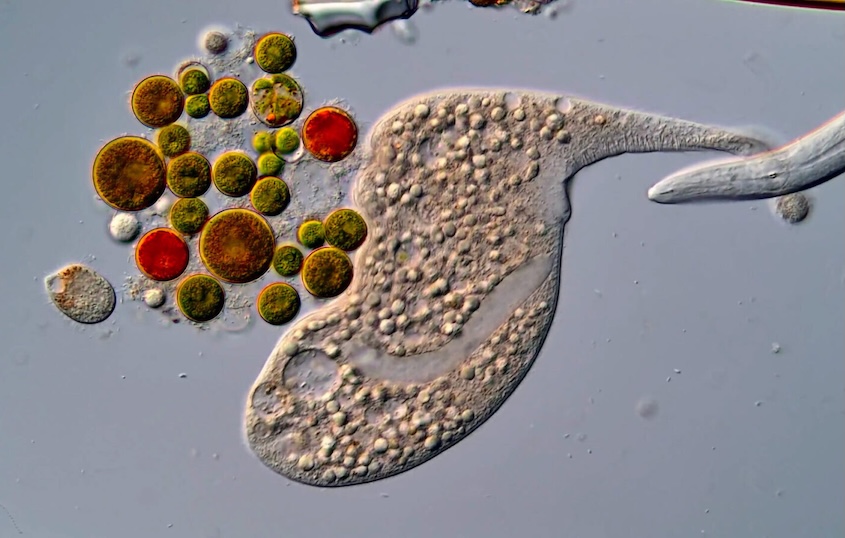
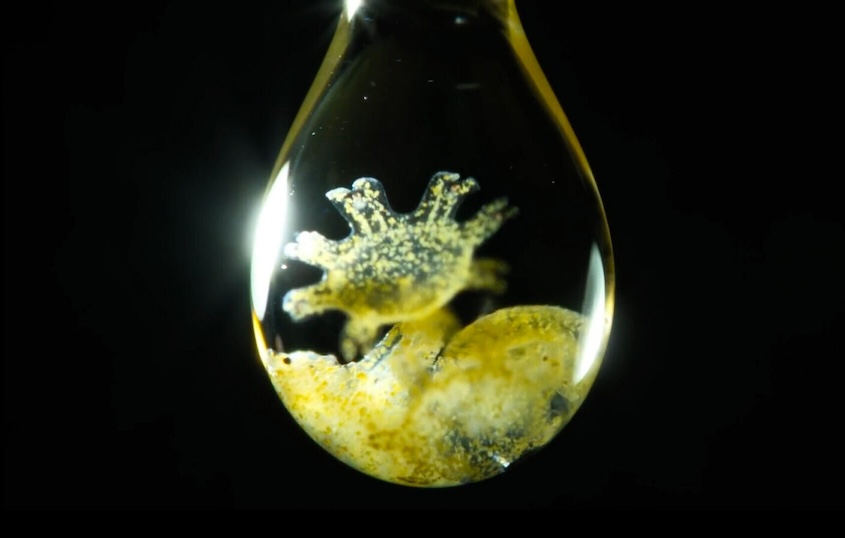
With Xu's video removed from the winners' gallery, every other finalist moves up a spot. Nguyen Nam Nhat of Vietnam now holds first place for his video of a tiny roundworm alongside a single-celled Dileptus, filmed using differential interference contrast at 40x magnification. Benedikt Pleyer's clip of jellyfish larvae suspended in water droplets moves to second, and Andrew Moore's footage of synchronized cell division now ranks third.
For more articles like this, check out our Tech News page!