Content
Recent Posts
Can Hearing Aids Lower Dementia Risk? What New Studies Reveal


Hearing loss has long been linked to a higher risk of dementia, but whether hearing aids can help prevent it remains an open question. A new clinical trial published on September 28, 2026, found that hearing aid treatment did not significantly reduce the likelihood of older adults progressing to dementia-level impairment over two years. Yet the same study found encouraging signs of cognitive improvement among participants who received hearing aids.
The findings, published in JAMA Neurology, add to a growing body of research examining whether treating hearing loss could help protect brain health. While earlier studies have suggested potential benefits, the latest results show why researchers remain cautious about drawing firm conclusions.
Content
What the Latest Clinical Trial Found
The CHOICE randomized clinical trial involved 703 adults aged 60 and older in Shanghai, China, who had moderate to severe hearing loss and mild cognitive impairment, a condition involving changes in memory or thinking that are greater than expected with normal aging but do not necessarily amount to dementia.
Researchers assigned 353 participants to receive hearing aid treatment and 350 to receive hearing care education. After 24 months, 3.09% of the hearing aid group had progressed to dementia-level impairment, compared with 4.74% of the education group. Although the rate was lower among hearing aid recipients, the difference was not statistically significant.
The study also produced a more encouraging finding. Approximately 15.34% of hearing aid recipients improved from mild cognitive impairment to a normal score on the study's Clinical Dementia Rating scale, compared with 2.36% of the comparison group. This improvement was statistically significant, although researchers cautioned that the finding requires further investigation.
Of the 703 participants initially enrolled, 610 completed the trial. The two-year follow-up and relatively small number of participants reaching dementia-level impairment also limit what can be concluded about long-term prevention. The results do not establish that hearing aids prevent dementia, but they do not rule out potential benefits over longer periods either.
Why Earlier Studies Tell a Different Story
Previous research has suggested that treating hearing loss may benefit cognitive health, particularly among older adults already at greater risk of decline.
The ACHIEVE trial, published in The Lancet in 2023, followed 977 adults aged 70 to 84 with untreated hearing loss. After three years, researchers found no significant difference in cognitive decline across the entire study population. Among participants recruited from an existing cardiovascular health study, who had more risk factors for cognitive decline, hearing treatment slowed cognitive decline by approximately 48%.
More recently, a May 2026 study published in Cell Reports Medicine examined data from 61,089 adults with hearing loss across 33 countries. Over an average follow-up of 6.5 years, hearing aid use was associated with a 9% lower relative hazard of probable dementia. The association was stronger among participants who reported effective hearing improvement from their hearing aids, while those reporting poor effectiveness did not show the same benefit.
These findings are not necessarily contradictory. The studies examined different populations and outcomes, and the May 2026 analysis was observational, meaning it could identify associations but could not establish that hearing aids directly prevented dementia.
What Hearing Loss May Have to Do With Dementia
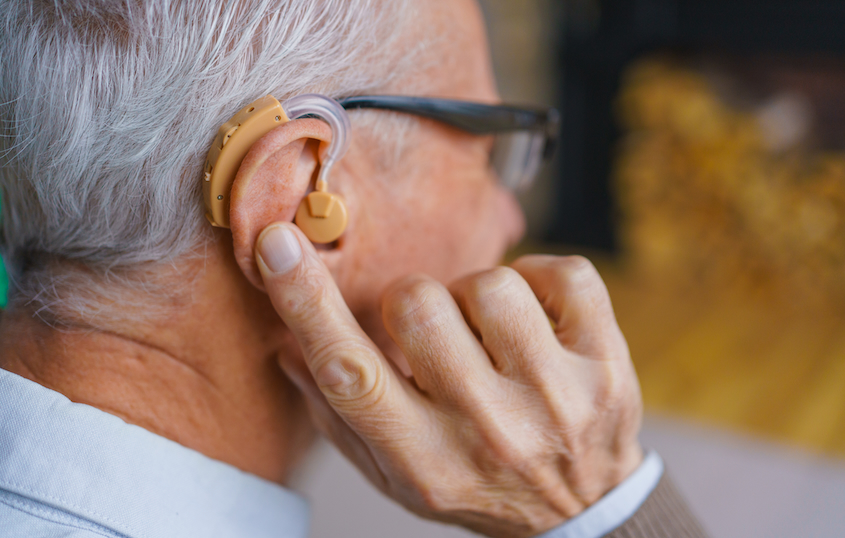
Researchers have proposed several explanations for the connection between hearing loss and cognitive decline. One possibility is that difficulty hearing forces the brain to devote more resources to understanding speech, potentially affecting other cognitive functions. Hearing difficulties may also contribute to social withdrawal, reducing opportunities for conversation and mental engagement.
Another possibility is that hearing loss and dementia share underlying causes, including age-related changes in the brain or vascular health problems. Researchers have yet to establish how much each factor contributes to the observed association.
The 2024 Lancet Commission on dementia prevention identified hearing loss as one of 14 potentially modifiable dementia risk factors. The commission estimated that midlife hearing loss accounted for approximately 7% of dementia cases at the population level, under its modeling assumptions. That estimate does not mean hearing aids have been proven to prevent 7% of dementia cases.
For now, the evidence supports a connection between hearing health and cognitive health, but important questions remain about whether treating hearing loss can change the course of dementia. Hearing aids can improve access to sound and communication, regardless of their uncertain role in dementia prevention. Longer clinical trials may help determine whether the cognitive improvements observed in recent research translate into lasting protection against dementia.
For more articles like this, visit our Lifestyle News Page!