Content
Recent Posts
Blood Moon Total Lunar Eclipse Peaks March 3


A total lunar eclipse will unfold in the early hours of March 3, 2026, turning the full moon a deep red color visible across large parts of the world. The event, often called a “blood moon,” occurs when Earth moves directly between the sun and the moon, casting its shadow across the lunar surface.
For many regions, this will be one of the last widely visible total lunar eclipses before late 2028, making it a rare chance to witness one of the sky’s most striking transformations.
Content
When the Eclipse Happens
The eclipse progresses in stages as the moon moves through Earth’s shadow.
Key global times (UTC):
- Partial eclipse begins: 04:44
- Totality begins: 06:12
- Maximum eclipse: 06:58
- Totality ends: 07:43
Visibility varies by location. Some regions will experience the eclipse before dawn, while others will see it during nighttime hours when viewing conditions are ideal.
Where it will be visible
Clear views are expected across:
- North and South America
- Europe
- Africa
- Parts of Asia and the Middle East
- Australia and the Pacific
Weather conditions and the moon’s position above the horizon will determine viewing quality.
Why the Moon Turns Red
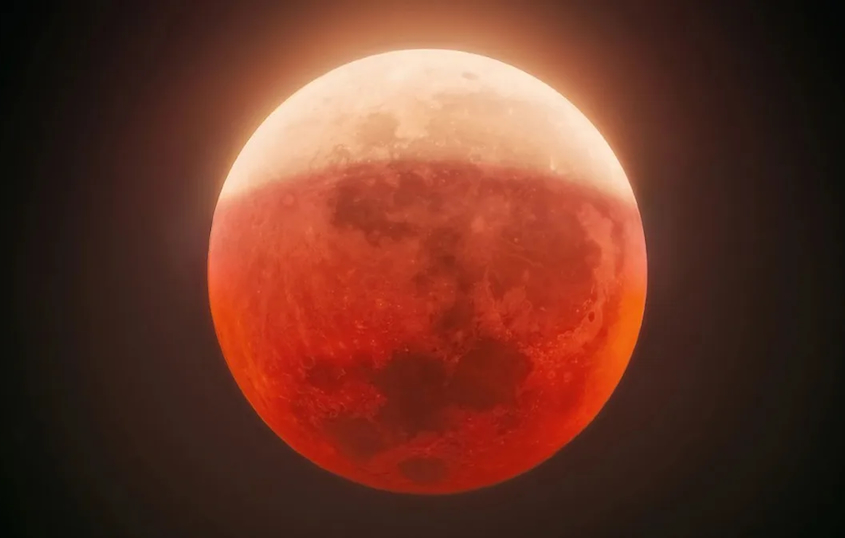
A lunar eclipse occurs when Earth blocks direct sunlight from reaching the moon. During totality, the moon does not go dark. Instead, it glows red due to a process called Rayleigh scattering, the same effect that creates red sunsets.
Here’s what happens:
- Sunlight passes through Earth’s atmosphere
- Shorter blue wavelengths scatter away
- Red and orange wavelengths continue toward the moon
- The moon reflects that filtered light back to Earth
Dust, smoke, or volcanic particles in the atmosphere can deepen the red color, which is why each eclipse may appear slightly different in tone.
Why It’s Called a “Blood Moon”
The term “blood moon” comes from the moon’s copper-red appearance during totality. It is not a scientific term, but has become widely used to describe the dramatic color shift.
The March full moon is also known as the Worm Moon, a traditional seasonal name marking the transition toward spring in the Northern Hemisphere.
How Ancient Cultures Interpreted Lunar Eclipses
Before astronomy explained eclipses, many civilizations viewed them as powerful omens or cosmic battles.
Mesopotamia
- Considered eclipses as warnings affecting rulers
- Rituals were performed to protect the king
Ancient China
- Believed a celestial dragon was devouring the moon
- People made loud noises to drive it away
Inca civilization
- Thought a jaguar attacked the moon
- Ceremonies were held to protect the world from darkness
Hindu tradition
- Linked eclipses to the demon Rahu swallowing the moon
- Fasting and purification rituals were common
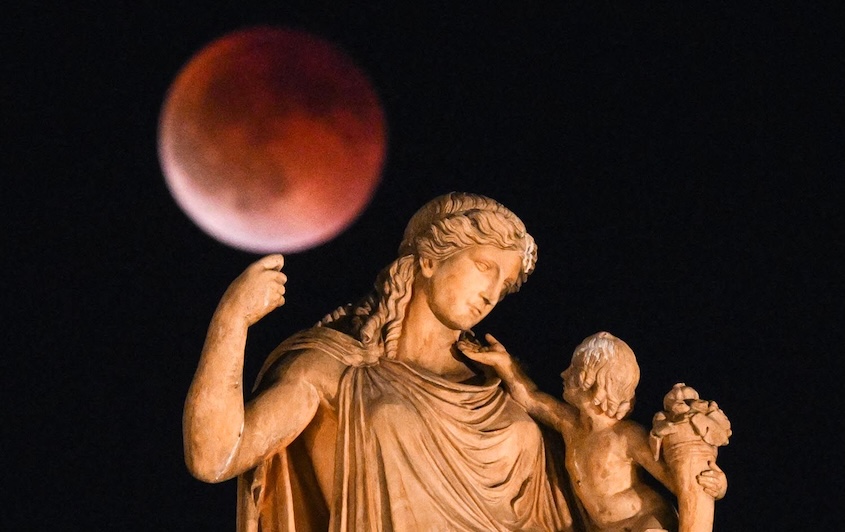
Across cultures, eclipses often symbolized disruption, renewal, or transformation. Today, they remain moments that inspire reflection even as science explains their mechanics.
Why This Eclipse Stands Out
This event offers several reasons to look up:
- Total lunar eclipses are safe to view with the naked eye
- The red coloration can range from copper to deep crimson
- Atmospheric conditions influence the intensity of color
- Viewing conditions vary by region and time of night
- It is one of the last widely visible total eclipses before late 2028
For photographers and skywatchers, totality provides the most dramatic views.
How to Watch & Photograph the Eclipse
No special equipment is needed to enjoy a lunar eclipse.
For the best experience:
- Find a location away from city lights
- Allow your eyes to adjust to darkness
- Use binoculars for sharper detail
- Stabilize your camera or phone for clearer photos
Even smartphones can capture the reddish hue during totality when stabilized.
A Shared Moment Under the Same Sky
For a brief window, the familiar glow of the full moon will shift into a deep red sphere suspended in darkness. Events like this connect science, history, and human curiosity in a single view of the night sky.
Whether watched for astronomy, photography, or tradition, the March 3 blood moon offers a reminder that celestial rhythms continue to unfold above us — and that sometimes, all it takes is looking up.
For more articles like this, visit our lifestyle news page!